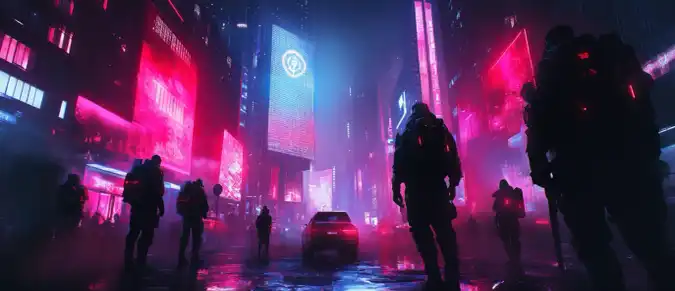

EgoVersus: First Strike is a dynamic sci-fi FPS that brings old-school shooter mechanics into a hybrid Web3 ecosystem. The project combines classic fast-paced gameplay, NFT-based customization, a flexible digital economy, and a multichain infrastructure. The game is developed within The EgoVerse universe, which unites several gaming directions, tokenomics, and an expanded asset ownership system. Thanks to this structure, EgoVersus becomes part of a large gaming ecosystem where skill, competition, and digital ownership complement each other.
- EgoVersus: First Strike — concept, setting and its place in The EgoVerse
- Gameplay, modes and maps of EgoVersus: The First Strike
- NFT assets, digital ownership and the hybrid economy of EgoVersus
- Blockchain infrastructure of The EgoVerse and the role of the $UFO token
- Prospects of EgoVersus: First Strike and competition in the Web3 market
1. EgoVersus: First Strike — concept, setting and its place in The EgoVerse
At its core, EgoVersus: First Strike is a fast-paced sci-fi FPS set in a dark futuristic world. Society is collapsing: criminal factions control entire districts, while the remnants of authority barely keep order. Players find themselves in the heart of the conflict, taking part in rapid team battles on urban arenas where reaction speed, accuracy, and teamwork are crucial.
The game is part of The EgoVerse ecosystem — a multi-game environment that includes projects such as Astro Karts. All titles share a unified logic of digital ownership: NFT assets, characters and in-game items are created for use across different games. Thus, EgoVersus serves as the flagship action product that demonstrates the potential of Web3 gaming without forcing players into token usage from the beginning. Users can play it as a traditional FPS, enabling Web3 features only when they choose.
2. Gameplay, modes and maps of EgoVersus: The First Strike
EegoVersus offers a fast and skill-oriented gameplay model. Team battles take place on several maps, each featuring unique architecture: vertical layouts, long corridors, tight choke points and open zones. Players select characters, use both ranged and melee weapons and adapt their playstyle to the map's dynamics.
Key gameplay features (list):
-
High-speed sci-fi FPS with old-school spirit. Low TTK, high pacing, precision-focused combat.
-
Diverse weapons and roles. Aggressive rushers, snipers, support players — each role is effective in the right position.
-
Maps with unique geometry. Locations like The Mall, Warehouse and The Cut create distinct tactical scenarios.
-
Planned expansion of modes. Upcoming additions include a zombie mode, cooperative PvE missions, and battle royale formats.
-
Broad hardware support. The game runs on powerful PCs as well as low-end systems and macOS.
These features help attract Web2 gamers who value honest FPS gameplay without mandatory cryptocurrency or NFT use. At the same time, the game remains fully compatible with Web3 mechanics, but does not make them dominant.
3. NFT assets, digital ownership and the hybrid economy of EgoVersus
The economic system of EgoVersus is built on the principles of a Web2.5 hybrid model. Users can simply play and earn skins or tokenize these items, turning them into NFTs for trading, exchanging or renting.
Below is a table describing the main asset categories and their utility:
| Asset Type | Description | Use Case |
|---|---|---|
| Character skins | Avatar appearance, including partner collections | In-game use, resale on marketplaces |
| Weapon NFTs | Unique weapon models or visual modifiers | Customization, collecting, rental |
| Cosmetic items | Emblems, graffiti, accessories | Unique appearance enhancement, trading |
| Tournament items | Rewards for participating in events | Status boost, limited collectibles |
The project’s economy emphasizes that the game is not a traditional P2E product. Income does not come from “grinding,” but from a competitive model: tournaments, rare skins, and community involvement. Players can trade assets in fiat or crypto — both systems are supported. This reduces speculation and makes gameplay mastery the main source of value.
4. Blockchain infrastructure of The EgoVerse and the role of the $UFO token
The technical structure of EgoVersus relies on a multichain architecture. NFT collections and game transactions are distributed across several networks, including Avalanche and Solana. This makes the game more accessible while reducing transaction costs. Within The EgoVerse ecosystem, a key role is played by the $UFO token, built on the SEI network.
The token functions as a universal “economic connector” between titles in the universe. It supports purchases, cross-game events, rewards and asset transfers between games. A total of 50 million $UFO will be released over 36 months — the distribution model is designed for sustainable development rather than early hype.
The philosophy of the infrastructure is centered around Web2.5 — minimal friction between blockchain features and traditional gameplay. Players can keep Web3 disabled and enjoy a standard shooter experience or gradually integrate into The EgoVerse's economic model.
5. Prospects of EgoVersus: First Strike and competition in the Web3 market
EgoVersus enters the growing sector of Web3-FPS titles, yet stands out through its balance between gameplay quality and careful use of tokenization. Fast-paced combat, macOS support, low hardware requirements and a fair PvP system make the game appealing to a wide audience. While it competes with Unreal Engine shooters, multichain projects and Web3 esports arenas, EgoVersus benefits from the strong support of The EgoVerse ecosystem.
The future of the project will depend on updates, new maps, tournaments and collaborations with NFT collections. The ability to connect multiple games through shared assets gives The EgoVerse a strategic advantage: players gain a unified metaverse where digital ownership extends beyond a single product. With proper support and marketing, EgoVersus can secure a stable position in the Web3 FPS niche.