

In the modern era of artificial intelligence development and complex computing, the demand for powerful graphics processing units (GPUs) is rapidly growing. However, access to these resources is often limited by their high cost and scarcity. The Io.net project offers an innovative solution to this problem by creating a global decentralized network that aggregates unused GPU capacity from individuals and data centers. This platform allows developers and companies to access the necessary computational resources for training machine learning models and performing other complex tasks more efficiently and cost-effectively than traditional cloud providers.
Contents:
- What is Io.net?
- Key Problems Solved by the Platform
- Architecture and Main System Components
- Tokenomics and Blockchain's Role in the Ecosystem
- Io.net Prospects and Technology Use Cases
- Conclusion
What is Io.net?
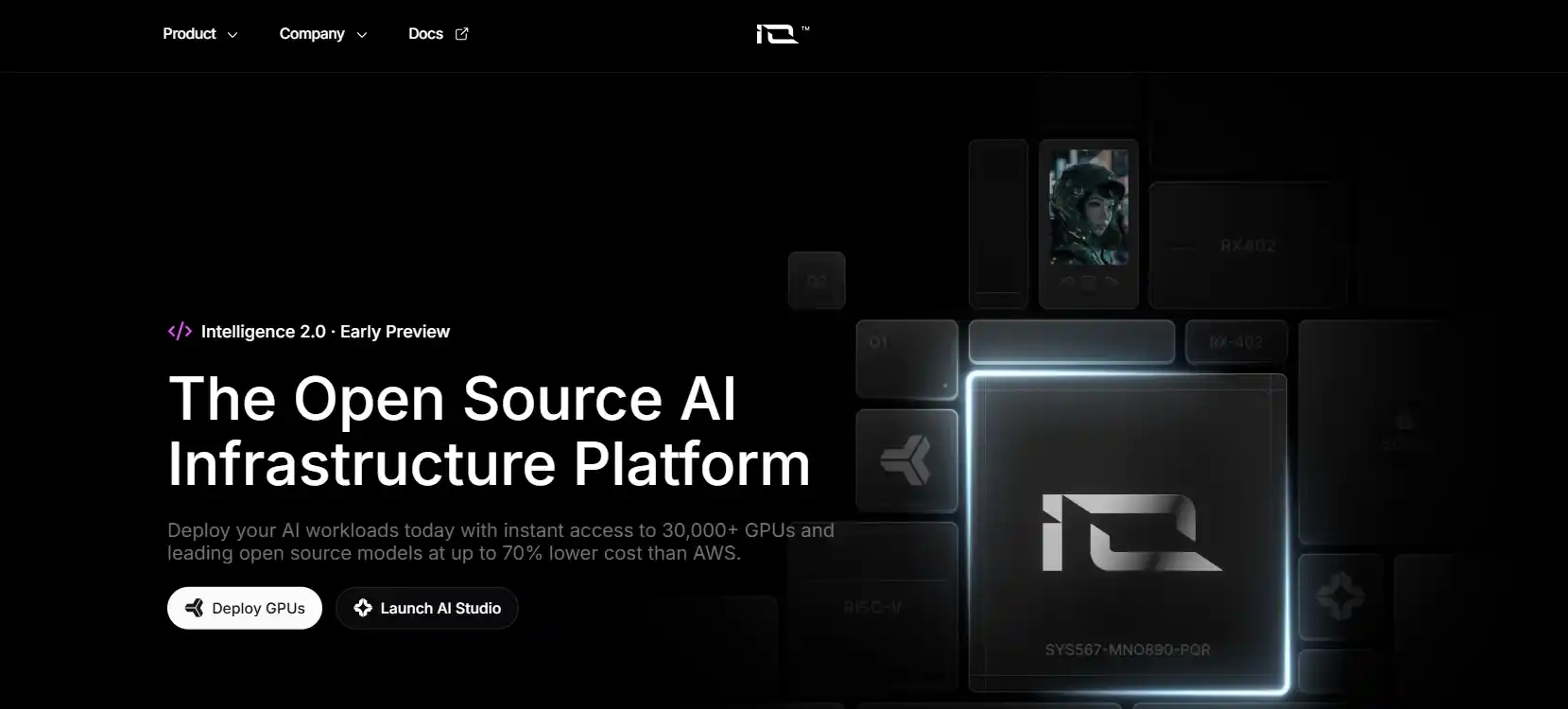
Io.net is a decentralized network that aggregates unused computational resources from graphics processing units (GPUs) from various sources worldwide. By creating a unified and scalable cloud, the project aims to democratize access to high-performance computing, making it more accessible for developers and companies. The platform operates as a Decentralized Physical Infrastructure Network (DePIN), efficiently coordinating supply and demand in the computing power market.
Instead of relying on a limited number of traditional providers, the ecosystem forms a global open marketplace. Here, owners of underutilized GPUs can monetize their resources and receive rewards, while specialists in machine learning and data analysis can rent the necessary power for complex tasks at competitive prices, avoiding long-term commitments and high costs.
Key Problems Solved by the Platform
The high-performance computing industry faces two critical problems: the excessive cost of renting powerful GPUs and their chronic shortage. For startups and researchers in the field of artificial intelligence, these barriers often become insurmountable, slowing down innovation and the development of new models. Centralized cloud providers struggle to meet the growing demand, leading to long queues and inflated prices.
The Io.net platform offers a solution that fundamentally changes the resource provisioning model. Instead of building new data centers, it consolidates unused graphics processors from individuals and organizations into a single pool. This approach not only increases the overall market supply but also creates a more competitive environment, leading to significantly lower costs for end consumers and providing them with unprecedented scaling flexibility.
Architecture and Main System Components
Io.net's efficiency is ensured by its well-thought-out decentralized architecture, which connects resource providers and their consumers. The key elements of this system are worker nodes, clusters, and client applications, interacting through the specialized IO-SDK software kit. This framework automates the processes of deploying, managing, and monitoring computational tasks.
For clarity, let's examine the main roles in the network and their functions:
| Role | Description | Key Task |
|---|---|---|
| Provider | Owner of hardware resources (GPU/CPU) | Integrate their resources into the network to earn income and maintain its stability |
| Client | End consumer of computing power | Rent resources for executing tasks (AI/ML, rendering) at an affordable price |
| Cluster | Virtual pool of GPUs | Combine disparate computing power from different providers into a single computational unit for solving complex tasks |
This approach creates a flexible and fault-tolerant environment where resources are dynamically allocated to specific needs. Clustering allows even geographically distributed devices to be combined into powerful virtual supercomputers, providing clients with access to the required performance without investment in their own infrastructure.
Tokenomics and Blockchain's Role in the Ecosystem
The foundation of Io.net's economic model is its native IO token, which performs several key functions within the ecosystem. This digital unit serves as a means of settlement between clients renting computing power and providers offering their resources. Such a system creates a closed-loop economy where all participants are motivated to interact honestly and productively, and rewards are distributed transparently and automatically.
The integration of blockchain technology ensures the necessary security and reliability of all operations. Smart contracts automate the processes of task coordination and reward distribution, minimizing operational costs and eliminating the risk of human error. The distributed ledger guarantees the immutability and public verification of all transactions, creating a trustless environment between unfamiliar participants in the global network without the need for a central intermediary.
Io.net Prospects and Technology Use Cases
The potential application of Io.net's decentralized computing extends far beyond current tasks, opening up new possibilities for various industries. The platform can become key infrastructure for projects requiring scalable and cost-effective resources. Its flexibility allows it to adapt to the unique requirements of specific workloads.
Among the most promising use cases are:
- Entertainment Industry: High-speed rendering of complex 3D scenes and visual effects for film and gaming.
- Scientific Research: Conducting large-scale simulations in genetics, climatology, and new materials development.
- Financial Analysis: Training predictive models and processing large datasets for algorithmic trading.
- Decentralized Artificial Intelligence (DeAI): Creating and training open AI models in a transparent and accessible environment.
Thanks to the global resource pool, the technology provides developers with unprecedented freedom for experimentation and innovation. This lays the groundwork for the formation of a new computing power market, where access to supercomputing capabilities becomes a democratized and standardized service.
Conclusion
The Io.net project offers a revolutionary approach to solving one of the most acute problems in modern computing – the shortage of available GPU capacity. By creating a global decentralized network, the platform not only reduces the cost of renting computational resources but also fundamentally changes the model of their provision, making high-performance computing accessible to a wide range of developers and researchers.
The integration of blockchain technology and its own tokenomics provides the necessary transparency, security, and economic incentives for the sustainable development of the ecosystem. This creates a solid foundation for the formation of a new market for computing power, where access to supercomputing capabilities becomes a democratized and standardized service, opening new horizons for the development of AI and science-intensive technologies.