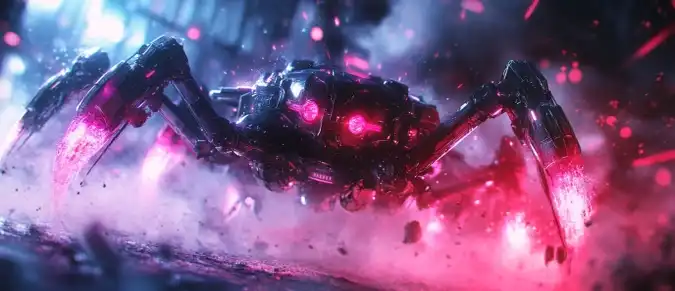

Spider Tanks is a competitive Web3 game developed by Gala Games and the GAMEDIA studio, combining classic 3×3 arcade gameplay with blockchain-based economics. Players build custom combat vehicles from modular parts, fight in arena battles, earn victory points, and convert them into the SILK token. The ecosystem unites players, NFT asset holders, node operators, and map collectors, forming a complete on-chain microeconomy. A key feature of the project is its sustainable reward model with dynamic emission, maintaining equilibrium between earnings and spending.
- Origins and Concept of Spider Tanks
- Gameplay and Features
- Economic System and SILK Token
- Asset Ownership and Node Infrastructure
- Project Prospects and Risks
Origins and Concept of Spider Tanks
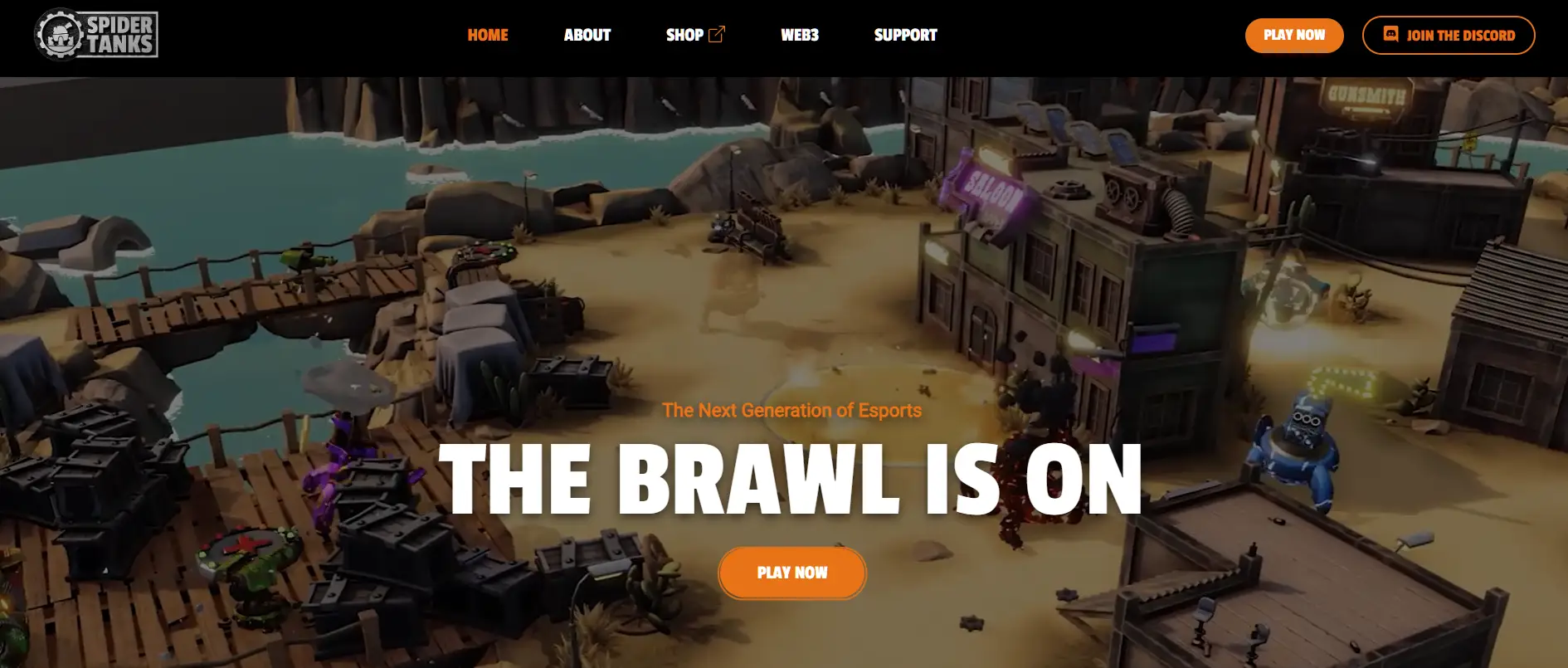
Spider Tanks emerged within the Gala Games ecosystem as an experiment focused on esports-oriented gameplay in the Web3 space. The developer, GAMEDIA (Netherlands), is known for its portfolio of arcade titles. The project began testing in 2021 and officially launched in 2022. Its game logic and economy are implemented on GalaChain (formerly GYRI) — Gala Games’ proprietary L1 network, offering low fees and Ethereum compatibility for the SILK token. Thus, Spider Tanks became one of the first Web3 titles to unify infrastructure, economy, and gameplay within a single ecosystem.
The game combines MOBA and action shooter mechanics, maintaining accessibility and fast-paced dynamics. Gala Games positions it as a strategic pillar in expanding its gaming ecosystem. The community actively participates in balancing tests and development feedback, ensuring that Spider Tanks evolves in collaboration with its player base.
Gameplay and Features
The core of Spider Tanks lies in tactical 3×3 battles across diverse arenas. Each player assembles a combat tank by combining a body and weapon. The chosen configuration defines playstyle — from agile strikers to long-range snipers or defensive supports. Developers emphasize diversity through multiple game modes, upgrades, and visual customization. The gameplay is skill-based, rewarding precision and teamwork rather than “pay-to-win” advantages.
Main gameplay features:
-
Tank builder — combine different bodies and weapons to create unique setups.
-
Game modes — Team Deathmatch, Capture the Flag, Chicken Chaser, and other scenarios.
-
Pilot Program — allows NFT tank owners to lease their vehicles to other players for shared rewards.
-
Progression system — upgrade parts and stats using the in-game currency Arachnium.
-
Free-to-Play — play without owning NFTs via rotating free tanks.
Each match lasts about three minutes, offering quick, action-packed sessions. The matchmaking system uses equipment level and stats to ensure fair competition. Regular tournaments and seasonal events drive long-term engagement, while the Pilot Program lowers entry barriers, fostering collaboration between players and asset owners.
Economic System and SILK Token
The core of Spider Tanks’ economy is the SILK token, earned from victories and used for in-game upgrades. Its model relies on daily dynamic emissions and a burn mechanism for spent tokens, maintaining supply-demand balance.
| Indicator | Description |
|---|---|
| Token | SILK (ERC-20 and GalaChain) |
| Max Supply | 100 million |
| Soft Cap | 50 million |
| Daily Emission | 0.25% × (50 million − circulation) |
| Burn Mechanism | Every SILK spent in-game is permanently burned |
| Honor System | Reduces rewards for dishonest players |
| In-game Currencies | SILK and Arachnium (for upgrades) |
The Victory Points (VP) system adds another layer: each win earns VP, which are converted to SILK daily. Token circulation expands and contracts in sync with player activity, forming a “closed-loop” economy. Arachnium serves for purchases, upgrades, and cosmetics, boosting SILK demand.
This approach prevents inflation and ties the economy to real gameplay demand. The more players spend within the ecosystem, the greater the token’s value — encouraging healthy engagement and long-term retention.
Asset Ownership and Node Infrastructure
The Spider Tanks ecosystem features several ownership tiers for digital assets. Beyond pilots, there are node, map, and tank owners who earn rewards by supporting the network. The key roles distribute rewards approximately as follows:
-
Planetary Node owners — host matches, maintain the network, and earn ≈ 33% of daily rewards.
-
Map NFT owners — receive ≈ 15% share of VP from winning teams.
-
Node Depot (additional staking) — ≈ 20% allocation.
-
Gala and GAMEDIA teams — around 30% of rewards.
-
Founder Nodes — up to 2% for ecosystem support.
Each match is hosted on a map linked to an active node, which returns to the pool afterward, ensuring balanced participation. Owning infrastructure assets provides passive income and incentives to sustain network stability.
Nodes and maps have rarity levels affecting match frequency and rewards, creating a “meta-game” economy where infrastructure owners evolve assets alongside active players.
Project Prospects and Risks
Spider Tanks remains one of the most advanced examples of Web3 gaming with a functioning on-chain economy. Its advantages include low entry barriers, transparent tokenomics, an engaged community, and strong backing from Gala Games. However, the project faces certain risks: slow updates, token volatility, and dependency on player activity may affect stability. Both players and investors are advised to take a strategic approach — join tournaments, leverage the Pilot Program, and monitor tokenomic updates.
Spider Tanks could bridge traditional esports and Web3 gaming if developers continue to expand content and refine user experience. With an emerging foundation for leagues, in-game events, and partnerships, and support from Gala Games, the project may become a benchmark for sustainable “Play & Own” models, where true value stems from participation rather than speculation.